Scandic Nürnberg Central: A hotel in three acts
A hotel can change considerably without ever changing address. Over the course of just a few years, the 311-room hotel at the gateway to Nuremberg’s historic city centre has moved through three distinct phases: from a leased hotel, to an independently operated and comprehensively repositioned Hotel Pomander, and finally to Scandic Nürnberg Central.

Behind those changes is a story of active hotel property ownership and of using different parts of the Pandox business model at different stages of an asset’s development. What began as the acquisition of an attractive hotel property with an existing lease ultimately became a broader transformation involving operations, investment, repositioning and a new long-term commercial structure.
An opportunity behind an existing lease
Pandox acquired the property in 2019 with an existing fixed lease to Maritim Hotels. The underlying fundamentals were attractive. The approximately 15,000-square-metre property is located close to Nuremberg’s historic city centre and central railway station, with convenient connections to the airport and the city’s important exhibition and conference market.
The property therefore had many of the characteristics Pandox looks for in a hotel investment: a strong location, significant scale and exposure to several sources of hotel demand. At the time of acquisition, however, the existing lease limited the opportunity to make more fundamental changes to the hotel product and operating model.
That opportunity emerged when the lease expired in 2021. Rather than immediately signing a new lease with another operator, Pandox decided to bring the hotel into Own Operations. This gave Pandox direct control over the property during an important period in its development and created the flexibility to rethink both the hotel product and its market positioning.

Creating Hotel Pomander
The ambition went considerably further than renovating the existing hotel. Pandox saw an opportunity to create a new product and identity that could make better use of the property’s location, scale and facilities.
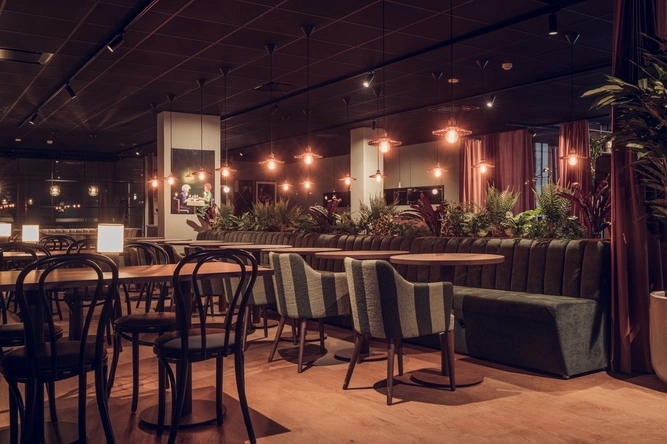
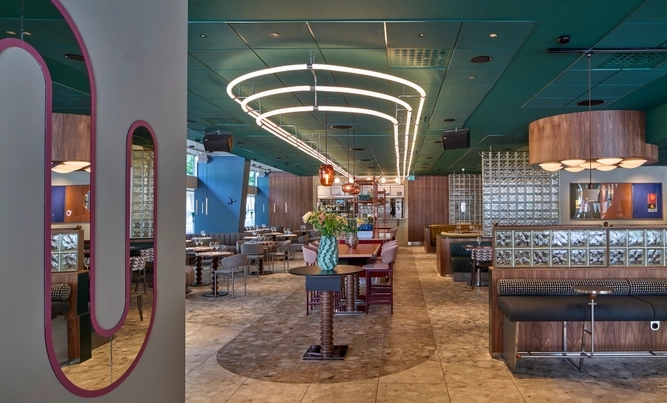
Following an extensive refurbishment and repositioning programme, Hotel Pomander emerged. All 311 rooms – including suites, junior suites, studios and family rooms – were transformed, together with the hotel’s public areas. A new food and beverage offering was introduced through Public Kitchen & Bar and The Blend, a combined coffee shop, bar and co-working space designed to create a more contemporary and flexible hotel environment.
The meeting and event facilities were another important part of the repositioning. With a ballroom capable of accommodating up to 800 people, the hotel has the scale to compete for larger meetings and events, complementing its business and leisure demand and strengthening its position in the Nuremberg market.
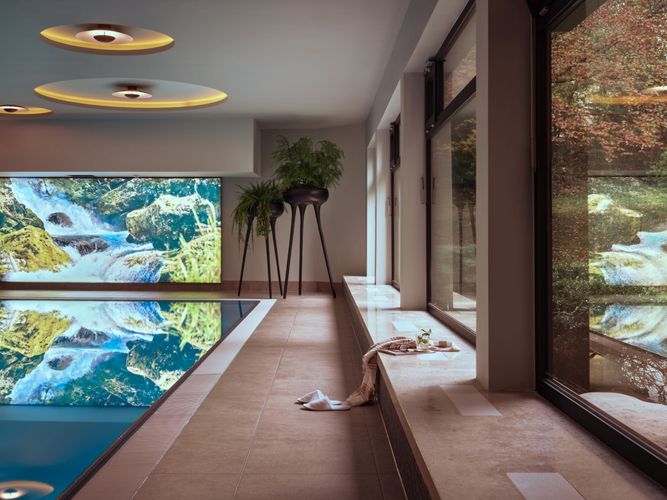
On the top floor, the gym and wellness facilities were also completely renovated. A swimming pool, relaxation areas and saunas overlooking the city added another dimension to the guest experience and helped create a more complete hotel product.
Even the new name was intended to establish a stronger connection with the destination. Hotel Pomander took inspiration from Peter Henlein, the Nuremberg craftsman associated with the development of some of the earliest portable timepieces in the early 16th century.
Taken together, the investments created a fundamentally different hotel: a modern product with a clearer identity, broader guest proposition and stronger platform for both business and leisure demand.

Own Operations as a tool for transformation
For Pandox, Own Operations can represent a long-term operating model. But it can also serve another purpose: providing direct control and flexibility during a period when a hotel requires significant change.
In Nuremberg, bringing the property into Own Operations created the conditions for Pandox to manage the transformation directly. Rather than committing immediately to a new long-term lease structure, Pandox could first invest in the property, establish a new hotel product, develop its commercial position and create a stronger operating platform.
This also meant that the decision about the hotel’s long-term operating structure could be made from a different starting point. Instead of leasing the property in its previous condition, Pandox could approach potential partners with a comprehensively repositioned hotel and a clearer understanding of its commercial potential.
Once the transformation had been completed and the new hotel product established, the next stage in the property’s development could begin.

Finding the right long-term partner
In 2023, Pandox signed a new revenue-based lease with Scandic Hotels, including a minimum rent guarantee. The property subsequently became Scandic Nürnberg Central, marking the beginning of the third phase in the hotel’s development under Pandox ownership.
The new agreement brought the property back into Pandox’s leased business, but from a fundamentally different position than at the time of acquisition. The hotel had been renovated and repositioned, a new commercial platform had been established and a new long-term operator had been secured.
The journey therefore came full circle in terms of operating model, but not in terms of the asset itself. What began as a hotel with an inherited fixed lease became a directly operated hotel during its transformation and ultimately returned to a long-term lease structure as a substantially different product.
Since Pandox acquired the property, its market value has increased by approximately 10 percent.

Using the full toolbox
The transformation of Scandic Nürnberg Central illustrates why active hotel property ownership extends beyond physical investment. Creating value in a hotel property can require different tools at different points in time, and the optimal operating model for an asset can change as the property develops.
In Nuremberg, Pandox first acquired an attractive hotel under an existing lease and waited for the opportunity to take a more active role. When the lease expired, the hotel was transferred to Own Operations, providing the control and flexibility needed for a comprehensive repositioning. Pandox then invested in the physical product, established a new identity and operating platform, and ultimately secured Scandic as a new long-term operating partner under a revenue-based lease.
The sequence is important because each stage created the conditions for the next. Taking control of the hotel enabled the transformation. The transformation created a stronger hotel product. And the stronger product provided the foundation for a new long-term lease structure.
Scandic Nürnberg Central therefore represents several parts of the Pandox business model within a single property: acquisition, hotel operations, asset management, investment, repositioning and leasing. The tools changed over time, but the objective remained the same – to strengthen the hotel’s competitive position and create a more attractive long-term business case.
Scandic Nürnberg Central
Location: Nuremberg, Germany
Rooms: 311
Size: Approximately 15,000 sqm
Acquired: 2019
Repositioned: 2021–2023
Operator: Scandic Hotels
Lease: Revenue-based with minimum guarantee
Property value development: Approximately +10%